Got a tip for us?

News

A portion of Verizon’s network crumpled on Wednesday, with up to 175,000 customers across US seeing "SOS" in their iPhones’ status bars instead of connection bars.

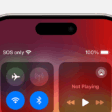
iPhone users with Verizon may see "SOS" in the status bar, as the device cannot connect to Verizon’s network. As a result, you may not be able to make or receive most phone calls, send or receive text messages, or use data over 5G or LTE.

Apple explains what "SOS" means in a support document:

If you see SOS or "SOS only" in the status bar, your device isn’t connected to your cellular network, but you can still make emergency calls through other carrier networks. This feature is available in Australia, Canada, and the United States.

Verizon is aware of the outage, and it is working on a fix.

"We are aware of an issue impacting wireless voice and data services for some customers," said Verizon, in a social media post, shortly after 1 p.m. Eastern Time. "Our engineers are engaged and are working to identify and solve the issue quickly. We understand how important reliable connectivity is and apologize for the inconvenience."

At 2:14 p.m. Eastern Time, Verizon said it is still investigating the issue.

If you’re in China and think the deal on the iPhone 16 you’re seeing just can’t be beaten, you might want to think again.

iPhone 16

In a feature published recently, GeeksChalk examined the differences between a real iPhone 16 from Apple and a counterfeit iPhone 16 one of its staff bought in China for just $100. And although the price alone might be enough to make you realize it’s a fake, GeeksChalk found that the devices are strikingly similar.

When they broke the fake iPhone 16 out of the box, they quickly discovered that it “has the same form factor.” The fake handset comes with the same design, the same side buttons, and even uses a USB-C port that works. Whoever designed the fake phone even used the same pentalobe screws Apple employs to make it harder to break into the smartphone and tweak things.

Moving to the packaging, GeeksChalk said that it was nearly identical to Apple’s own packaging. It used the same material and even said “Designed by Apple in California.”

So, if the hardware looks the same, has all the same features, and comes in a nearly identical box, how can you tell it’s a fake? According to GeeksChalk, it’s revealed in the software.

When you turn on the handset, you’ll quickly find that it doesn’t actually come with a Dynamic Island. Instead, the counterfeit creators designed a software Dynamic Island that looks like the real deal but is actually running on its operating system. And although the operating system comes with apps you’d typically see in an iPhone, they’ve been skinned and are actually repurposed Google apps.

GeeksChalk said that the “App Store” on the fake phone crashes often. But when a warning comes up to tell you what happened, it says that the “Google Play Store” had crashed. And although Apple Maps is there, it opens Google Maps. Try the Podcasts app and you’ll see YouTube.

Arguably the most concerning difference, however, is the hackability of the device. GeeksChalk reported that the device comes with “backdoors and malicious apps” out of the box. Sharing information on the handset, then, would be a really bad idea.

Apple and other companies have pressed China to stop counterfeit goods and the Chinese government has cracked down. But the sheer number of counterfeit goods makes it difficult, if not impossible, to stop. And when they’re as close to the real thing as the iPhone GeeksChalk has, it can be even more difficult to stop it.

So, if you’re in China and looking for a cheap iPhone, beware. Chances are, it’s not what you think.

Tag: Fakes

What Happened: The tech giant is expected to release its iPhone 16 series in September, continuing its tradition of annual launches. The new series is anticipated to feature larger screens, a revamped design, and improved performance, among other upgrades.

Screen Size And Display: The iPhone 16 is expected to have a 6.1-inch display, while the iPhone 16 Plus will feature a 6.7-inch display. The Pro models are anticipated to be even larger, with the iPhone 16 Pro sporting a 6.3-inch display and the iPhone 16 Pro Max having a screen of 6.9 inches. Previously, it was speculated that this iPhone with a gigantic screen was named iPhone 16 Ultra.

The new models are also rumored to feature a new OLED display with micro-lens array or MLA technology, offering improved brightness and energy efficiency. However, this will be a new technology for Apple smartphones. Therefore, it is possible that iPhone enthusiasts will have to wait longer, in case the technology is not ready for the iPhone 16 lineup.

Design And Camera: The iPhone 16 is expected to have a new design, with the addition of the iPhone 15 Pro’s Action buttonand a potential haptic Capture Button on the iPhone 16 Pro. The camera array is also expected to be revamped for spatial video content, with a pill-shaped design being rumored.

The iPhone 16 Pro may also feature a super telephoto periscope camera for improved long-distance photography. It has also been reported that the iPhone 16 Pro could adopt molded glass lenses to reduce the thickness and weight of the camera.

Software, Battery And Performance:Performance-wise, the iPhone 16 series is expected to be powered by the **A17 Bionic **chip, with the Pro models potentially featuring an A18 Bionic chip. The new models are also expected to feature a graphene heat sink to address heating issues reported with the iPhone 15.

Moreover, it is almost certain that the 2024 iPhone models will be powered by iOS 18 and one consistent rumor surrounding this software update is improved AI-powered functionalities. This could entail a revamped Siri, capable of efficiently executing complex tasks through voice commands.

A leaked report previously suggested that the iPhone 16 and iPhone 16 Pro Max may come with an increase in battery capacity. There’s also a possibility that the iPhone 16 Plus might experience a reduction in its battery size. It was also reported that the tech giant might be considering adopting Wi-Fi 7 technology for the iPhone 16 Pro lineup.

Polished Titanium Outlook And More: It has been reported that Cupertino might introduce a new polished titanium finish for iPhone 16 Pro models — more polished than its predecessor, along with being better scratch-resistant.

Some leaks have also suggested that new iPhone 16 models could feature "space black" and "rose" colors. The leak also suggests that the "Natural" and "White Titanium" hues are set to undergo slight modifications. It’s expected that the "Natural Titanium" shade will have a more grayish tone, while "White Titanium" will resemble a "Silver White" shade similar to the iPhone 14 Pro’s silver model.

The iPhone 16 series is coming in September this year, almost certainly. Having said that, a tipster has just revealed the iPhone 16 Pro colors. We presume that this goes for both the iPhone 16 Pro and iPhone 16 Pro Max, though there could be one exclusive color for each.

The iPhone 16 Pro is coming in four colors, and they have seemingly been revealed

In any case, according to ShrimpApplePro who dug up the info from Weibo, the iPhone 16 Pro is coming in Space Black, Gray, White, and Rose colors. Apple could use different names for these colors, so do take these names with a grain of salt.

The tipster also noted that Apple will use color-infused glass with matte texture back once again. That’s a well-known process that makes those nice-looking matte backs that iPhone users like so much.

The entire iPhone 16 series won’t exactly be groundbreaking, based on rumors. Apple won’t be changing things much from the design standpoint. Major changes are expected with the iPhone 17 in 2025.

Apple will slim down the bezels on the ‘Pro’ models even further

What we do know, based on rumors, is that the company will use teh ‘Border Reduction Structure in order to reduce bezels. That applies to the ‘Pro’ models only, though, most probably.

On top of that, the iPhone 16 Pro models are expected to arrive with slightly larger displays. Considering that their bezels will be slightly thinner, the two devices should not be much larger than the iPhone 15 Pro models are.

The iPhone 16 and iPhone 16 Plus could retain the same displays sizes. Nothing is set in stone just yet. All models will be made out of metal and glass, though the iPhone 16 Pro series is expected to utilize a titanium frame.

Unlike the design of these smartphones, iOS 18 is expected to deliver major changes. It’s actually rumored to become the biggest update since the launch of the first iPhone.

Artificial intelligence and machine learning have played an important role in the iPhone for years, powering features like Portrait Mode for the camera and the ability to copy and paste text from photos. But at Apple’s Worldwide Developer Conference, we’re expecting to learn about how Apple could take that to the next level by potentially bringing generative AI to the iPhone.

Generative AI, or AI models trained on large volumes of data that create content in response to prompts, has exploded in popularity following the success of ChatGPT. Tech giants such as Microsoft, Google, Samsung and Amazon, among many others, have introduced generative AI into their biggest products over the past year. Apple, however, has been quiet about its plans for generative AI, although CEO Tim Cook teased updates for 2024.

"But we’ve got some things that we are incredibly excited about that we’ll be talking about later this year," Cook said in response to a question about generative AI on the company’s most recent earnings call.

Between Cook’s comments, new research papers and the acquisition of AI startups, Apple is clearly on to something. Here’s what Apple’s AI plans for the iPhone might look like based on reports that have circulated in recent months.

iOS 18 will likely be full of AI features

Apple’s next major iPhone operating system, which will probably be called iOS 18, is expected to introduce a ton of new AI features to the iPhone. It could be the most significant update since the original iPhone in Apple’s eyes, according to Bloomberg.

Craig Federighi, Apple’s senior vice president of software engineering, has been tasked with implementing a bunch of new tools into iOS fueled by the company’s large language model, reports Bloomberg. It’s unclear precisely what that means for iOS 18, but the report says we could see improvements in the Messages app and Siri. What we won’t see is an Apple alternative to ChatGPT, Bloomberg also reports.

Samsung and Google have already provided a glimpse into how generative AI is changing smartphones. Both companies offer features that can rewrite text messages in a different tone before hitting the send button and photo editing tools that can refill blank spaces in a photo after moving an object. It’s possible Apple could take a similar approach, although we won’t know for sure until iOS 18 arrives.

Google could power some new AI features

Apple is reportedly in talks with Google and OpenAI about using their respective AI models to power certain upcoming iPhone features, according to reports from Bloomberg, The New York Times and The Wall Street Journal. These models would likely be used for AI features that must be processed in the cloud, reports Bloomberg. Apple is reportedly planning to use its own models for future software tools that can be processed on-device without requiring a cloud connection.

On-device AI is generally considered to be more secure and private since data doesn’t have to leave your device but typically requires more powerful processors. That’s why Siri is only capable of answering health-related questions on the Apple Watch Series 9 and Apple Watch Ultra 2, which run on the company’s newest smartwatch chips.

Based on the reports, it sounds like Apple is focusing its efforts on new AI models designed to run locally, while seeking a partner for cloud-based AI. That wouldn’t come as too much of a surprise; Apple prides itself on creating new features and technologies that take full advantage of how hardware and software work together. It’s much easier to do that when you don’t have to rely on a third-party for data processing.

It also wouldn’t be the first time Apple has partnered with another company on certain technologies and components. Google already pays Apple billions of dollars to be the default search engine on iPhones, for example, and Qualcomm supplies Apple with 5G modems for the iPhone.

A smarter Siri

Siri seems like a natural area for Apple to apply any AI advancements, and reports from The Information and Bloomberg suggest it may do just that. The Information reported last year that Apple has doubled down on efforts to make Siri better at automating tasks. The report cites the ability to ask Siri to create GIFs from your last five photos and then share it as an example of the types of use cases Apple has in mind.

We won’t know what Apple’s plans are until it announces them. But automation features like those mentioned above would feel like a fitting evolution for Siri that builds on its existing Shortcuts functionality.

An AI App Store

Apple may launch a new AI App Store, according to Ben Reitzes, head of technology research at Melius Research, who spoke with CNBC.

"In June we should start to see them lay the groundwork for this new app store, for how it’s going to work with AI, how you can buy AI apps through the App Store, " he said during the CNBC interview.

There are a lot of unanswered questions, such as whether this supposed AI app store would be for the iPhone, the Mac or all of Apple’s products. It’s also unclear if Reitzes is referring to a separate App Store entirely, or a new section in the current App Store focused on AI apps. The latter seems more in line with Apple’s usual approach. Either way, emphasizing AI in the App Store would be a testament to the technology’s importance from Apple’s perspective.

A new chip with more AI processing power

Apple’s next iPhone processor, presumably called the A18, is expected to offer better AI performance for the iPhone 16 lineup, according to Taiwanese news outlet Economic Daily News and analyst Jeff Pu, as MacRumors reported. AI has been a big area of focus for years, with Apple increasingly expanding the capabilities of the neural engine inside its A-series chips. But given that Apple is expected to develop new AI-powered iPhone features that rely on local processing, it wouldn’t be surprising to see more significant upgrades.

Apple isn’t usually first to market with new product categories. Instead, it’s known for popularizing technologies, as it did with smartphones, smartwatches and tablets. Regardless of Apple’s approach, all eyes will be on the company to do the same with AI and generative AI.

Tag: iOS 18

New iPhones are around the corner. Apple is gearing up for releasing their most innovative smartphones in years with the iPhone 12 series.
“The design is not just what it looks like and feels like. The design is how it works”
— Steve Jobs
Let’s discuss all the rumours that we’ve heard about the new 2020 iPhones.

Design & Build

according to
EverythingApplePro
the new 2020 iPhones will reportedly feature an angular or flat edge design, reminiscent of the iPhone 4 lineup or iPad Pro series. The aim of this design change is to reduce the impact of metal on network transmission, which will also allow implementing bigger antenna lines, perhaps to accommodate 5G. The high-end iPhone 12 Pro Max will be slightlytaller and thinner than the iPhone 11 Pro Max.
Reports indicates that 2020 lineup will feature four new iPhones: 6.7-inch iPhone 12 Pro Max, 6.1-inch iPhone 12 Pro, 6.1-inch iPhone 12 Max and a 5.4-inch iPhone 12. The top of the line iPhones will feature stainless steel body, while the low-end iPhone 12 Max and 12 lite will feature an aluminium body sandwiched with an all-glass design on all models.

The colour options of the new iPhones are quite difficult to predict since Apple always tries to come up with a different lineup every year. But just like last year, the low-end iPhones will feature more colour options, while the top of the line Devices will feature industrial colours.

Display

Apple’s displays are considered to be the best on the market. One-upping last year all the iPhones this year will include OLED displays to facilitate a flexible design. The lower end devices (iPhone 12 Max and iPhone 12) will include a Super Retina OLED display made by BOE (a Chinese display manufacturing firm) and the top of the line iPhones will use a Super Retina XDR OLED made by Samsung.

Pro-Motion Display

The iPhone 12 Pro and Pro Max will feature a high refresh rate 120Hz display which will be known as a Pro-Motion display. Whereas the low-end devices will feature a regular 60Hz display. High refresh rate in top of the range models will enhance the video watching experience and enhances the experience of the OS. Games can take real advantage of Pro-Motion displays, which will give an edge for players in online multiplayer games.
Anyhow high refresh rate displays will drain the batteries quite quickly if this by any chance won’t meet Apple’s battery standards, Apple may get rid of this feature from its devices altogether.

Internal Hardware

A-14 Chipset

Apple’s homemade mobile processor is termed as the powerhouse of the mobile chipset market by both iPhone and Android users. Reports indicates that the new iPhones are going to use a 5-nm A-14 chip made by TSMC(Taiwan Semiconductor Manufacturing Company). This processor will be more focused on artificial intelligence and enhancing raw performance.

RAM & Storage

Rumors points out that the 2020 iPhone Pro models will come with 6GB RAM with a base storage of 128GB, while the iPhone 12 and lite iPhones will come with 4GB RAM and a base storage of 128GB.
iPhone 12 Pro and Pro Max come in 3 storage variants 128GB, 256GB and 512GB while the iPhone 12 Max and iPhone 12 will have only 2 storage variants 128GB and 256GB.

5G

All the iPhone 12 models are expected to support5G. Instead of using Intel’s modem, The Cupertino based company is looking to use Qualcomm’s 5G modem in 2020 lineup. The Pro models will feature mmWave, while iPhone 12 Max and iPhone 12 will feature sub-6GHz. 5G which will be only enabled in countries where 5G is currently supported. In other countries, the 5G will be disabled in all models.

Software

Apple’s iOS is what makes the iPhones more user friendly than Android phones with complete software lockdown, iOS is the most secure operating system than any other operating system out there. iPhone 12 series will come with iOS 14.

iOS 14 will include a number of improvements and to address the bugs from iOS 13. iOS 14 might give users the ability to add widgets on the home screen. Features to iMessage like mentions are going to be added in the new iOS release. Apple might be looking to release new applications such as fitness app, AR app, sleep tracking app and much more. With this release, users can set third-party apps as default apps. Apple might release the beta software in June and the final release could be in September if all goes to plan.

Cameras

Rear Cameras

2019 iPhone models are already one of the best camera Smart phones with
triple camera set up
on
iPhone 11 Pro and iPhone 11 Pro Max.
2020 iPhone 12 Pro and Pro Max will most probably use the same setup from 2019 models and might try to enhance the overall experience, AI photography and other camera improvements.
2020 iPhone 12 Pro and Pro Max will feature a 3 camera setup on the back, while base models will have a dual-camera setup.

Reports even States that the Pro models of this year will include LiDAR Scanner which Apple introduced in it’s iPad Pro 2020 lineup. LiDAR (light detection and ranging) is used to determine distance by measuring how long it takes light to reach an object and reflect back. It’s a great way to get a much more accurate 3D representation of the scene in front of the camera, which is useful in computational photography and especially in augmented reality.

Front Cameras

The 2020 iPhones will feature a smaller notch because of a smaller front camera module. This change will also result in an increase in screen to body ratio. Apple will improve once again on Face ID technology with a new TrueDepth front-facing camera. All the jingles from the 2019 iPhone models will make an appearance in the tiny notch with a slightly different placement. The 2020 Face ID will improve on unlocking angles to support wider angles.

Price

2020 iPhones will start at a relatively lower price tag compared to previous 2019 models. The 5.4-inch iPhone 12 with a 128GB storage is expected to start at $649 and will cost you $749 for bigger storage model. The 6.1-inch iPhone 12 Max will cost $749 for its base model and $849 for its 256GB storage model.
iPhone 12 Pro is expected to start at $999 for 128GB, $1099 for 256GB and $1299 for the 512GB model, while iPhone 12 Pro Max will start at $1099 and will cost you as much as$1399 for the fleshed-out model.

Release Window

Due to the current global pandemic, the production of the new iPhones was delayed by over a month. The volume production of the iPhones is expected to start in the first few weeks of July. Due to this few of the models will be released in tranches. Few reports indicates that sub-6HGz iPhone 12 models will be released early than mmWave 5G iPhone Pro models.
Rumors points out that the new iPhones won’t be launched until October or November and will ship only after a week after the launch date.
Based on what was leaked so far, the 2020 iPhones surely are the best iPhones Apple has ever made. What are your thoughts on the 2020 iPhone lineup? Are you going to buy one?
See also:
9 Enhanced Features We Want in iPhone 12

New iPhones are around the corner. Apple is gearing up for releasing their most innovative smartphones in years with the iPhone 12 series.
“The design is not just what it looks like and feels like. The design is how it works”
— Steve Jobs
Let’s discuss all the rumours that we’ve heard about the new 2020 iPhones.

Design & Build

according to
EverythingApplePro
the new 2020 iPhones will reportedly feature an angular or flat edge design, reminiscent of the iPhone 4 lineup or iPad Pro series. The aim of this design change is to reduce the impact of metal on network transmission, which will also allow implementing bigger antenna lines, perhaps to accommodate 5G. The high-end iPhone 12 Pro Max will be slightlytaller and thinner than the iPhone 11 Pro Max.
Reports indicates that 2020 lineup will feature four new iPhones: 6.7-inch iPhone 12 Pro Max, 6.1-inch iPhone 12 Pro, 6.1-inch iPhone 12 Max and a 5.4-inch iPhone 12. The top of the line iPhones will feature stainless steel body, while the low-end iPhone 12 Max and 12 lite will feature an aluminium body sandwiched with an all-glass design on all models.

The colour options of the new iPhones are quite difficult to predict since Apple always tries to come up with a different lineup every year. But just like last year, the low-end iPhones will feature more colour options, while the top of the line Devices will feature industrial colours.

Display

Apple’s displays are considered to be the best on the market. One-upping last year all the iPhones this year will include OLED displays to facilitate a flexible design. The lower end devices (iPhone 12 Max and iPhone 12) will include a Super Retina OLED display made by BOE (a Chinese display manufacturing firm) and the top of the line iPhones will use a Super Retina XDR OLED made by Samsung.

Pro-Motion Display

The iPhone 12 Pro and Pro Max will feature a high refresh rate 120Hz display which will be known as a Pro-Motion display. Whereas the low-end devices will feature a regular 60Hz display. High refresh rate in top of the range models will enhance the video watching experience and enhances the experience of the OS. Games can take real advantage of Pro-Motion displays, which will give an edge for players in online multiplayer games.
Anyhow high refresh rate displays will drain the batteries quite quickly if this by any chance won’t meet Apple’s battery standards, Apple may get rid of this feature from its devices altogether.

Internal Hardware

A-14 Chipset

Apple’s homemade mobile processor is termed as the powerhouse of the mobile chipset market by both iPhone and Android users. Reports indicates that the new iPhones are going to use a 5-nm A-14 chip made by TSMC(Taiwan Semiconductor Manufacturing Company). This processor will be more focused on artificial intelligence and enhancing raw performance.

RAM & Storage

Rumors points out that the 2020 iPhone Pro models will come with 6GB RAM with a base storage of 128GB, while the iPhone 12 and lite iPhones will come with 4GB RAM and a base storage of 128GB.
iPhone 12 Pro and Pro Max come in 3 storage variants 128GB, 256GB and 512GB while the iPhone 12 Max and iPhone 12 will have only 2 storage variants 128GB and 256GB.

5G

All the iPhone 12 models are expected to support5G. Instead of using Intel’s modem, The Cupertino based company is looking to use Qualcomm’s 5G modem in 2020 lineup. The Pro models will feature mmWave, while iPhone 12 Max and iPhone 12 will feature sub-6GHz. 5G which will be only enabled in countries where 5G is currently supported. In other countries, the 5G will be disabled in all models.

Software

Apple’s iOS is what makes the iPhones more user friendly than Android phones with complete software lockdown, iOS is the most secure operating system than any other operating system out there. iPhone 12 series will come with iOS 14.

iOS 14 will include a number of improvements and to address the bugs from iOS 13. iOS 14 might give users the ability to add widgets on the home screen. Features to iMessage like mentions are going to be added in the new iOS release. Apple might be looking to release new applications such as fitness app, AR app, sleep tracking app and much more. With this release, users can set third-party apps as default apps. Apple might release the beta software in June and the final release could be in September if all goes to plan.

Cameras

Rear Cameras

2019 iPhone models are already one of the best camera Smart phones with
triple camera set up
on
iPhone 11 Pro and iPhone 11 Pro Max.
2020 iPhone 12 Pro and Pro Max will most probably use the same setup from 2019 models and might try to enhance the overall experience, AI photography and other camera improvements.
2020 iPhone 12 Pro and Pro Max will feature a 3 camera setup on the back, while base models will have a dual-camera setup.

Reports even States that the Pro models of this year will include LiDAR Scanner which Apple introduced in it’s iPad Pro 2020 lineup. LiDAR (light detection and ranging) is used to determine distance by measuring how long it takes light to reach an object and reflect back. It’s a great way to get a much more accurate 3D representation of the scene in front of the camera, which is useful in computational photography and especially in augmented reality.

Front Cameras

The 2020 iPhones will feature a smaller notch because of a smaller front camera module. This change will also result in an increase in screen to body ratio. Apple will improve once again on Face ID technology with a new TrueDepth front-facing camera. All the jingles from the 2019 iPhone models will make an appearance in the tiny notch with a slightly different placement. The 2020 Face ID will improve on unlocking angles to support wider angles.

Price

2020 iPhones will start at a relatively lower price tag compared to previous 2019 models. The 5.4-inch iPhone 12 with a 128GB storage is expected to start at $649 and will cost you $749 for bigger storage model. The 6.1-inch iPhone 12 Max will cost $749 for its base model and $849 for its 256GB storage model.
iPhone 12 Pro is expected to start at $999 for 128GB, $1099 for 256GB and $1299 for the 512GB model, while iPhone 12 Pro Max will start at $1099 and will cost you as much as$1399 for the fleshed-out model.

Release Window

Due to the current global pandemic, the production of the new iPhones was delayed by over a month. The volume production of the iPhones is expected to start in the first few weeks of July. Due to this few of the models will be released in tranches. Few reports indicates that sub-6HGz iPhone 12 models will be released early than mmWave 5G iPhone Pro models.
Rumors points out that the new iPhones won’t be launched until October or November and will ship only after a week after the launch date.
Based on what was leaked so far, the 2020 iPhones surely are the best iPhones Apple has ever made. What are your thoughts on the 2020 iPhone lineup? Are you going to buy one?
See also:
9 Enhanced Features We Want in iPhone 12

The new AirPods look and sound familiar, but have little more tricks.

Of the many cool products that Apple unveiled earlier this year, none have been more grately anticipated than the

second-generation AirPods.

The second generation AirPods look so identical to the first-generation version announced almost three years ago that they are almost indistinguishable. The design,

fit, and sound quality are exactly the same as the

first generation AirPods

Wearing the new AirPods

isn’t any more of a flex

than the first-generation because nobody seeing you will be able to tell the difference.

But there are a couple of improvements here — some outstanding, some less so — that make the new AirPods even great than the previous model. Apple hasn’t solved many of the

long-lasting complaints leveled at the AirPods, such as their fit and ability to work in noisy surroundings, but it has added some things that improve

the experience, without much ulteration.
With AirPods Pro, Apple may have solved a major wireless earbuds design flaw. The newly designed, noise-canceling AirPods might also stay in your ears now. AirPods Pro features active noise cancellation, water and sweat-resistant, an all new lightweight in-ear design, as well as a transparency mode to keep you aware of the world around you. You can read more about AirPods Pro

Here

The Good

  • Outstanding wireless performance and reliability
  • Great ease of use and setup
  • Improved battery life
  • Can effortlessly recharge battery case with wireless mat

The Bad

  • Won’t stay in everyone’s ears
  • “Hey Siri” voice response is sluggish
  • Doesn’t block outside noise well
  • Cannot connect to two devices simultaneously

The ugly

  • What is weird, is actually talking to Siri in public. When I am listening to music and I can’t really hear my own voice, I was worried I would say “Hey Siri” out loud in public and everyone would look at me like a weirdo. And to be honest, I just tried to get Siri to activate with a quiet voice at first and getting louder slowly to finally get Siri to listen to me. Again, it’s a learning curve that you get used to quickly.

The major adjustment from the first-generation AirPods is the ability to recharge the case on a wireless pad. The second-gen AirPods are either sold

with the new wireless charging case for $199 or with the standard case for the same $159 as before. In case you have the first-gen AirPods and would like to buy the wireless charging case, you can purchase it separately for $79 and it will work just the same as it does with the new AirPods.

The wireless charging case uses the Qi standard — just like the iPhone and most Android devices on the market — so, you can use the same charging pad

as your phone to charge your AirPods case. Put the case on the charger and the little charging light on the front of the case will turn orange and begin

charging. The light will go off after a few seconds, but the case will still be getting the juice as long as it’s resting on the mat.

THE NEW WIRELESS CHARGING functionality IS CONVENIENT, BUT THEN SLUGGISH

Charging the case wirelessly is slow — Apple indicates the case charges at 5 watts, which is slower than the iPhone is able to, and it can take up to

three and a half hours to completely fill up the case wirelessly, compared to the roughly two hours it takes over the Lightning cable, which is also an option

on the new case. Also, if you’re using a stand-style charger for your phone, that perhaps won’t work because the coils won’t line up — as desire

using a flat pad charger for the AirPods. I tried charging the case on a few flat pads I have at home and had no problems charging with any of

them.

If you’re the kind of person that puts your AirPods case in another case, wireless charging should still work, but perhaps the

indicator light will not show at all. Finally, if you have Samsung’s Galaxy S10 or a recent Huawei flagship phone, you can use your Android device to wirelessly charge

your AirPods, which is never not funny. And yes, you can use the new AirPods with an Android device and they will work perfectly with it as the first-generation

models. The main functionality you’ll lose are the double-tap controls and the ability to automatically pause music when you take off an AirPod from one of your ear, though

that

can be enabled with a third-party app.

Generally, the wireless charging ability is a pleasant convenience, however, it doesn’t drastically change the AirPods experience. If you’re already charging your

phone on a wireless pad or have one that can charge multiple devices simultaneously (but sadly, isn’t Apple’s

cancelled AirPower mat),

it’s pleasant to be able to charge your AirPods case in the same manner.

The other great thing with the AirPods is the new H1 chip that replaces the W1 chip of the first generation AirPods. Apple states the H1 chip has been explicitly designed

for headphones and facilitates most of the AirPods’ new features, such as faster switching between devices; always-listening, hands-free Siri access; improved

call quality in windy environments; lower latency when playing games; and longer battery life for calls.

Rather than having to double-tap one of the AirPods to launch Siri, you can now say “Hey Siri” to launch it, just like you can on an iPhone or new

Mac. This not only does this provide easier access to Siri, but it also allows me to configure the double-tap gesture to another action, such as play / pause or skipping

tracks.

But even with the new chip and hands-free ability, there’s still a significant delay from when I say “Hey Siri” to getting a response in my ear. Different

From the iPhone, there’s no bell or ding to indicate that the AirPods actually heard my command, and there’s obviously no visual indicator unless my phone is

out and I’m looking at the screen. As a result, I often end up repeating myself because there is no way to tell if Siri heard my command and is just being slow to

respond, or if my command wasn’t registered at all. It’s a frustrating experience that could be greatly improved with an audible ding to confirm that Siri

heard my command.

Apple says the H1 chip enables the AirPods switch between your devices up to two times faster than before, so if you use an iPhone and an iPad or a Mac, you

can swiftly switch between them. Maybe it is technically faster, but it never feels faster in use because switching devices still requires going into the

Bluetooth settings panel or Control Center on the device I want to switch to, selecting the AirPods, and then still waiting a few beats for them to

connect.

THE AIRPODS STILL CANNOT BE CONNECTED TO TWO DEVICES AT THE SAME TIME

I really wish Apple had improved this area. I love how Apple simplifies the process of pairing AirPods to my iCloud account and have them automatically ready

on every device I use, but I also just wish they could be connected to more than one device simultaneously. The Bose QC35s as well as the Sennheiser HD1s, and

many of other Bluetooth headsets are capable of this already. With those other headphones, if I want to switch from my iPhone to my iPad, I simply tab

play on the device I want to use instead of getting my hands dirty with audio source settings. If you are a Mac user, the

ToothFairy app

makes this a slightly better one-click process with the AirPods and is absolutely worth the $3.

The new chip apparently improves voice quality on calls in windy environments, too, but I haven’t really seen much of a difference in my testing. That

isn’t really a knock — I use the first-gen AirPods for taking calls all the time because they are already outstanding for it. Additionally, I haven’t noticed much

of a difference in latency or lag while playing games or watching video, mostly because I didn’t ever experience significant lag with the previous generation. Of

all the truly wireless headsets I’ve used in years,the first-generation AirPods have the tiniest amount of lag or video syncing issues and the second generation

is just as good.

Finally, the H1 chip also prolongs the battery life for talk time to a claimed three hours, a complete hour more than the first model. The battery life for

Music playback or audio remains at five hours, which, while no longer the longest battery life you can get in a truly wireless headphone, is still

Above average and very good. The charging case extends that to up to 24 hours; a 15-minute charge will offer three hours of listening or two hours

of call time.

Besides that, the new AirPods are still AirPods, which means they are truly great wireless earbuds if they fit in your ears. Apple is quick

to claim how last year the AirPods became the most popular wireless headphones on the market, so they evidently work for so many people. But

they don’t fit everyone

and the new generation doesn’t do anything to solve that. They also aren’t great in noisy environments like a plane or subway car because they don’t

have either passive or active noise cancellation abilities.

Just like I mentioned earlier, the sound quality of the new AirPods is precisely the same as the previous generation, with no material modifications. The sound is clear, full, and surprisingly

detailed, without overwhelming bass or fatiguing highs. The lack of any seal or noise-blocking capacity is annoying especially while I’m on the subway, which

makes the AirPods saturate into my environment, like I’m not even wearing headsets whatsoever.

Final thoughts

So should you buy them? If you have the first-gen AirPods and they are still working perfectly, then no, you’re obviously not gaining anything here. If you so desire

wireless charging, you can buy the case separately without having to spend $200 on a whole new set. However, if your first-gen AirPods can hardly hold a juice

any longer because you’ve been using them for a long time, then buying the new AirPods makes sense, since it’s ultimately impossible to repair these or replace the

batteries in them. You’re getting the same basic experience, with little more conveniences. (The fact that a nearly $200 device has a usage lifetime

of less than three years, nonetheless.)

THE NEW AIRPODS ARE JUST AS OUTSTANDING AS THE Previous versions

If you haven’t yet jumped on the AirPods boat and you know they’ll fit in your ears (if the wired EarPods that come with every iPhone fit you, the AirPods

will, fit you as well), they are still among the best truly wireless headphones on the market, with great battery life, solid connectivity, great ease of use, and

pretty good sound quality. They work great for Android users, just like the first model as well. The new wireless charging convenience comes at an higher

price, but for a great number of people, the AirPods are still tough to beat. Read

The 17 Best Tips and Tricks For AirPods Pro

Tag: AirPods